
Why Knowing When to Call a Professional for Garage Door Problems Could Save Your Life
Knowing when to call a professional for garage door problems is one of the most important safety decisions you’ll make as a homeowner. Your garage door is likely the largest moving part in your home — and one of the most used. Most households open and close their garage door 3 to 5 times a day. That’s a lot of stress on springs, cables, tracks, and motors.
When something goes wrong, the instinct is often to fix it yourself. But that instinct can be dangerous. Around 30,000 Americans are treated for garage door-related injuries every year. Many of those injuries happen because someone tried to handle a repair that needed a professional.
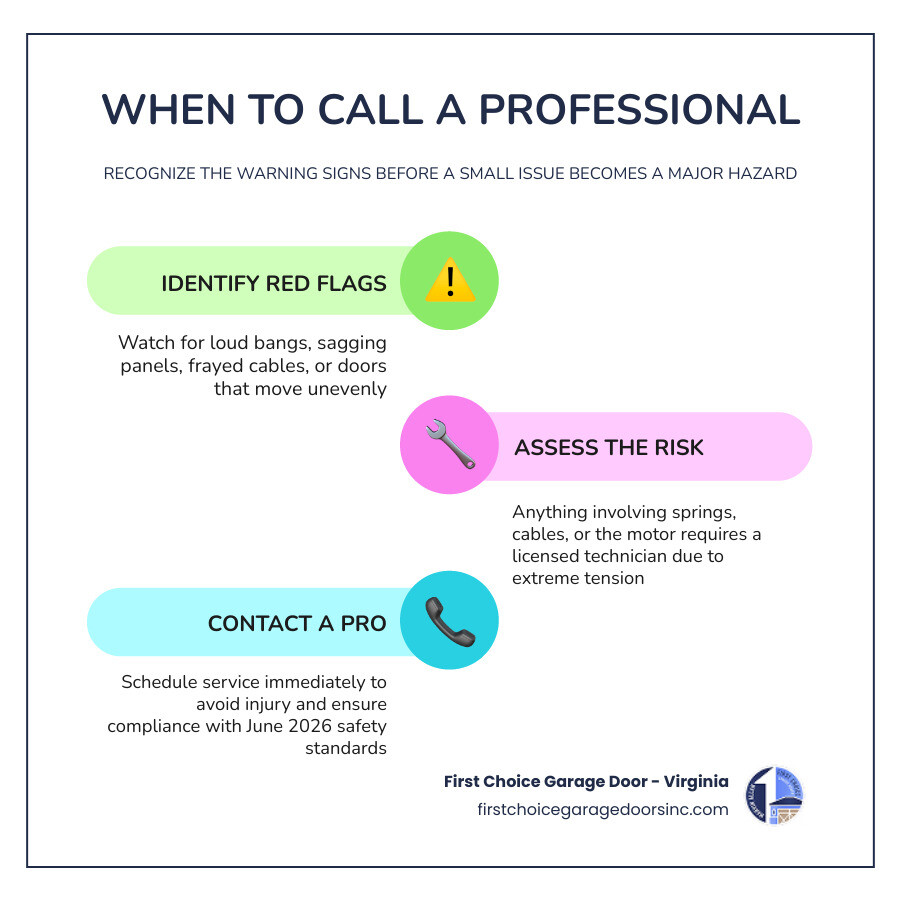
Here’s a quick answer — call a professional immediately if you notice any of the following:
- A loud bang or pop from the garage (likely a broken spring)
- The door is visibly off its tracks
- Cables look frayed, loose, or have snapped
- The door feels unusually heavy when lifted manually
- The door moves unevenly or sags on one side
- The opener hums but the door doesn’t move
- The auto-reverse safety feature is not working
- The door won’t stay closed or reverses unexpectedly
- You smell burning from the opener motor
- The door is stuck open and the house is unsecured
Some minor tasks — like replacing remote batteries, cleaning sensors, or lubricating hinges — are safe to do yourself. But anything involving springs, cables, tracks, or the opener motor should go straight to a licensed technician.
As of June 2026, safety standards for residential garage doors require functioning auto-reverse and photo-eye sensors on all modern systems. If those systems are failing, that’s not a DIY fix.
The sections below walk you through exactly what to watch for, what to leave alone, and how to find the right professional in Northern Virginia when you need one.
Handy when to call a professional for garage door problems terms:
- garage door making loud noises what they mean
- garage door moving slowly causes and solutions
- signs your garage door needs repair
Red Flags: When to Call a Professional for Garage Door Problems

Your garage door doesn’t usually fail completely out of nowhere. It typically drops hints — little behavioral changes, new noises, or slight delays — before a catastrophic breakdown occurs. Recognizing these early warning signs is the best way to keep your home secure and prevent minor issues from turning into dangerous, expensive failures.
When you notice your system acting up, it is crucial to consult Signs You Need a Garage Door Repair to understand what your door is trying to tell you. For example, a slow or delayed response time might seem like a minor annoyance, but it often points to a failing motor, worn-out rollers, or an underlying electrical issue. Ignoring these indicators can lead to getting your vehicle trapped inside (or outside) your garage at the worst possible moment.
If your door is struggling to lift, makes a grinding sound, or moves unevenly, these are clear indicators that the system is unbalanced. You can read more about these common indicators in our guide on Five Signs You Need a Residential Garage Door Repair. When a door is unbalanced, it places immense strain on the automatic opener, which can burn out the motor prematurely. You should Don’t Ignore These Red Flags From Your Garage Door because a door that behaves erratically is a major safety hazard waiting to happen.
Recognizing Structural and Mechanical Failures
Structural failures are often the easiest to spot visually, but they are also among the most dangerous. Bent tracks, sagging panels, and misaligned rails can cause the entire door to slip off its tracks and collapse.
If you notice gaps between the door panels when closed, or if the bottom of the door sags on one side, your system’s structural integrity is compromised. Over time, daily wear and tear can cause hardware to vibrate loose. While tightening a loose hinge bolt is a simple task, correcting bent steel tracks or rebalancing a sagging panel requires specialized tools and training. To help you evaluate the health of your door, check out 7 Red Flags That Your Garage Door Is Reaching the End and review The Ultimate Checklist of Garage Door Warning Signs to see if your structural issues warrant a professional intervention or a full system replacement.
Identifying Sensor and Opener Malfunctions
Modern garage door systems rely heavily on safety electronics to protect your family and pets. The photo-eye sensors, located a few inches above the floor on either side of the door, project an invisible infrared beam. If this beam is broken while the door is closing, the auto-reverse mechanism instantly stops and reverses the door.
If your door refuses to close and instead reverses unexpectedly, the photo-eyes are likely misaligned, dirty, or blocked by debris. You can easily wipe the lenses with a clean cloth and check for obstructions like spiderwebs or leaves. However, if the sensors are clean and aligned but the door still fails to close, or if the auto-reverse system does not react when you test it (by placing a solid object in the door’s path), you have a serious safety failure. Malfunctioning logic boards, damaged wiring, or failing safety sensors are complex electronic issues that require expert diagnostic equipment to repair safely.
High-Tension Hazards: Why Springs and Cables Are Too Dangerous for DIY
There is a reason why almost every safety warning on a garage door focuses on the springs and cables. These components do the heavy lifting, supporting and balancing doors that can weigh anywhere from 100 to 400 pounds. To make this massive weight feel light enough for a small motor (or a human hand) to lift, the springs store an incredible amount of mechanical energy.
Attempting to adjust or replace these parts yourself is one of the most hazardous home improvement mistakes you can make. Every year, around 1,500 emergency room injuries are caused by snapped springs or high-tension components striking homeowners. Understanding the Reasons a DIY Garage Door Repair Can Be Dangerous is the first step toward protecting yourself and your family. Because of the extreme forces involved, we always emphasize that Why Garage Door Springs Should Be Replaced by Professionals is a rule that should never be broken.
Understanding Spring Tension and When to Call a Professional for Garage Door Problems
Garage doors utilize either torsion springs (mounted on a metal shaft above the door opening) or extension springs (mounted along the sides of the upper tracks). Both types have a limited lifespan. Typically, garage door springs are rated for approximately 10,000 cycles (one cycle equals opening and closing the door once). For an average family using the garage 3 to 5 times a day, this translates to a lifespan of about 7 to 10 years.
When a spring reaches the end of its life, it doesn’t quietly slip away — it snaps with a sound like a gunshot. If this happens while you are near the door, or worse, while you are actively working on the spring with standard household tools, the released energy can cause severe lacerations, broken bones, or worse. For a detailed breakdown of spring mechanics and safety protocols, read Garage Door Spring Safety: What Every Homeowner Should Know and discover The High Tension Truth About DIY Spring Repair before you ever think about picking up a wrench.
Handling Snapped Cables and When to Call a Professional for Garage Door Problems
Working in tandem with your springs are the lift cables. These heavy-duty steel cables run from the bottom brackets of the door up to the cable drums. Because they are directly linked to the spring system, they are under the exact same extreme tension.
Over time, exposure to moisture, dust, and lack of lubrication can cause these cables to fray. A frayed cable has a significantly reduced tensile strength (normally rated between 1,800 and 2,200 pounds) and can snap without warning. When a lift cable snaps, the door will instantly become unbalanced, often hanging at a dangerous 45-degree angle or crashing down to the floor. If you suspect a cable is failing, you must Stop Before You Snap a Spring and Call a Pro to prevent a catastrophic structural collapse.
DIY vs. Professional Garage Door Repair
It is completely natural to want to tackle home maintenance projects yourself. Taking care of your home is satisfying, and minor upkeep is a great way to keep things running smoothly. However, knowing where to draw the line between a safe weekend DIY project and a job that requires professional intervention is vital.
When deciding whether to grab your tool bag or pick up the phone, it helps to review the core differences between Comparing a DIY vs Professional Garage Door Repair. There are certain mechanical, structural, and electrical risks that are simply not worth taking. Understanding Why a Garage Door Repair Should Always Be Done by a Professional for high-risk tasks will help keep your home safe and preserve your door’s warranty.
To help you quickly distinguish between safe tasks and professional-only territory, we’ve put together this simple reference table:
| Maintenance Task | Safe for DIY? | Requires a Professional? | Why? |
|---|---|---|---|
| Lubricating hinges, rollers, and tracks | Yes | No | Low risk; simple aerosol application keeps parts moving smoothly. |
| Tightening loose hinge bolts | Yes | No | Safe to perform with standard hand tools; no high-tension parts involved. |
| Cleaning tracks and photo-eyes | Yes | No | Simple cleaning prevents sensor blocks and physical obstructions. |
| Replacing remote control batteries | Yes | No | Simple battery swap; no mechanical or electrical hazards. |
| Replacing worn weatherstripping | Yes | No | Straightforward slide-in or nail-on installation at the bottom of the door. |
| Replacing broken torsion/extension springs | No | Yes | EXTREME DANGER. High-tension components can cause severe injury. |
| Replacing frayed or snapped lift cables | No | Yes | EXTREME DANGER. Connected to springs; high risk of door collapse. |
| Realigning bent or off-track rails | No | Yes | High risk of the door falling; requires specialized alignment tools. |
| Replacing damaged door panels | No | Yes | Requires un-tensioning springs and rebalancing the entire system. |
| Diagnosing/repairing opener motor failures | No | Yes | Involves complex electrical circuitry and motor gear replacements. |
Safe DIY Maintenance Tasks for Homeowners
As shown in the table above, there are plenty of tasks you can safely perform to keep your garage door in top shape.
- Lubrication: Applying a high-quality silicone-based or lithium spray lubricant to the metal hinges, rollers, and springs every six months keeps the door operating quietly. Never use WD-40, as it is a degreaser rather than a lubricant and will actually attract dust and grime over time.
- Tightening Hardware: Because your garage door vibrates during every cycle, bolts can wiggle loose. You can use a socket wrench to gently snug up any loose nuts on the hinges and brackets.
- Cleaning: Wiping down the tracks with a damp rag to remove grease buildup, cobwebs, and dirt prevents the rollers from slipping. Wiping the lenses of your photo-eye sensors is also an easy way to prevent unexpected door reversals.
- Battery Replacements: Swapping out dead batteries in your wall button, wireless keypad, or car remotes is a quick, safe fix.
Serious Problems That Require Expert Service
If a problem goes beyond basic cleaning, lubrication, or tightening, it is time to put down the wrench. Track realignment, panel replacement, and motor diagnostics require specialized knowledge.
For instance, if your door is off-track, trying to force it back into place can easily bend the steel rails, strip the opener’s internal gears, or cause the door to fall completely. Replacing a single damaged panel requires releasing the tension on the spring system, swapping the panel, and then recalibrating the springs to accommodate the weight change. For these reasons and more, there are many critical Reasons You Should Hire a Professional for a Garage Door Repair to ensure the job is done right the first time.
Deciding to Repair or Replace Your Garage Door
When faced with a major garage door issue, every homeowner eventually asks: Is it better to repair this, or is it time for a total replacement?
To make this decision easier, we recommend using the 50 Percent Rule. If the cost of repairing your existing door is more than 50% of the cost of buying a brand-new door, a replacement is almost always the smarter long-term investment. This is especially true if your door is approaching the end of its typical 15-to-20-year lifespan.
To help weigh your options, take a look at our guides on When to Repair vs Replace Your Garage Door and Choosing Between a Garage Door Repair or Replacement. Modern garage doors offer incredible benefits that older models lack, such as advanced smart home integration, robust security features, and superior insulation (measured in R-value). Upgrading to a highly insulated door can significantly lower your heating and cooling bills, especially if you have a bedroom located directly above the garage. For a fun, deep dive into this choice, read The Great Garage Door Debate: When to Fix and When to Fold.
Environmental Wear and Wood Garage Doors
In Northern Virginia, our garage doors have to endure a bit of everything — from hot, humid summers to freezing winter temperatures. This intense environmental wear is particularly tough on wooden garage doors.
High humidity and frequent rain can cause wood panels to absorb moisture, leading to warping, rotting, or swelling. When a wooden door swells, it becomes significantly heavier, throwing off the balance of the spring system and putting extra stress on the opener. If you have a beautiful wood door that is showing signs of weather damage, you should read about the Reasons to Let a Pro Repair Your Wood Garage Door. A professional can carefully shave, seal, and rebalance the door to preserve its classic aesthetic while ensuring safe operation.
Frequently Asked Questions About Garage Door Repairs
How often should I schedule professional garage door maintenance?
We highly recommend scheduling a professional maintenance tune-up at least once a year. Think of it like an oil change for your car. During a professional tune-up, a technician will perform a safety balance test, inspect all high-tension springs and cables for micro-fractures, lubricate all moving parts, and test the electronic auto-reverse safety features. This proactive, preventative care can extend your garage door’s operational lifespan to 15 to 20 years and prevent costly emergency repairs down the road.
What should I look for when choosing a reliable garage door repair professional?
When searching for a trustworthy technician in Northern Virginia, look for a company that is fully licensed, bonded, and insured. They should have a physical business address, positive community reviews, and offer transparent communication without high-pressure sales tactics. We recommend checking out Traits a Good Garage Door Repair Company Will Have to guide your search, and keeping an eye out for the Warning Signs of a Bad Garage Door Company (such as extremely low phone estimates that skyrocket once they arrive at your home).
What immediate steps should I take if my garage door is stuck open or off-track?
If your door is stuck open or has slipped off its tracks, your first priority is safety and security.
- Stop using the system immediately: Do not try to force the door shut using the automatic opener, as this can bend the tracks or snap the cables.
- Clear the area: Keep children, pets, and vehicles far away from the door, as an unbalanced door can fall without warning.
- Unplug the opener: Disconnect the power cord from the ceiling outlet to prevent anyone from accidentally operating the door via a remote.
- Secure your home: If the door is stuck open overnight, use a manual slide lock on the track if possible, or contact a professional for emergency service. If you are wondering why you shouldn’t try to force it closed yourself, read Why You Should Hire a Garage Door Repair Company to learn how professional intervention keeps your property secure and undamaged.
Conclusion
Your garage door is a complex, heavy mechanical system that keeps your home secure and your family safe. While minor tasks like cleaning sensors and lubricating hinges are great DIY projects, high-tension components like springs, cables, and structural tracks should always be left to the experts. Knowing when to call a professional for garage door problems protects your home, your wallet, and most importantly, your physical safety.
If you are experiencing any warning signs — from unusual grinding noises to a completely stuck door — we are here to help. At First Choice Garage Doors, we proudly serve homeowners throughout Northern Virginia, including Manassas, VA, and the surrounding regions. Our team of highly trained, licensed technicians is dedicated to providing prompt, professional, and stress-free service to keep your home running smoothly.
Need expert assistance with your garage door? Contact First Choice Garage Doors today to schedule your professional service or tune-up!